High Efficient BLDC Motor Family from Duowei Electric
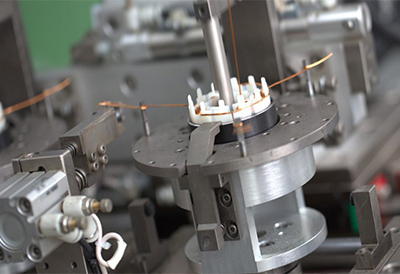
DCS brushless Duowei 400

February 14, 2019

Brushless DC motors are often referred to as a brushed motor turned inside out because the typical brushless motor has permanent magnets which rotate around a fixed armature, eliminating problems associated with connecting current to the moving armature.

An electronic controller replaces the brush/commutator assembly of the brushed DC motor, which continually switches the phase to the windings to keep the motor turning. The controller performs similar timed power distribution by using a solid-state circuit rather than the brush/commutator system.

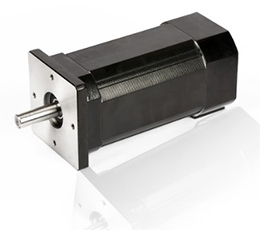
The latest Brushless DC motor is designed for Industrial Control, Medical Equipment, Auto Parts, Robot, Intelligent Storage, Fitness Equipment and other residential and light commercial pumps, fans and blowers.
Duowei2

Commutation with electronics instead of brushes allows for greater flexibility and capabilities not available with brushed DC motors, including speed limiting, “micro stepped” operation for slow and/or fine motion control, and a holding torque when 

The new Brushless DC motors have a compact design and thanks to low inertia they have high performances and are a low cost solution, some latest BLDC Motors already including Hall sensors and/or an encoder.stationary. Controller software can be customized to the specific motor being used in the application, resulting in greater commutation efficiency.

Go HERE fpr more information
Related Articles


Editor’s Pick: Featured Article

Weidmüller’s u-control 2000: The Automation Controller

Weidmüller’s u-control 2000: The Automation Controller

Weidmüller’s scalable engineering software, u-control 2000, adapts individually to your requirements. And, the u-control is powerful, compact and fully compatible with Weidmüller’s I/O system u-remote. This article looks at what makes u-control the heart of your automation.

Programmable logic controllers (PLCs) are one of the main components of any automated system. A typical control system has inputs, outputs, controllers (i.e., PLCs), and some type of human interaction with the system, a human machine interface (HMI), for example.

Read More


Latest Articles

  • How Motor Pole Count Influences Speed and Torque in Servo Motors

    December 9, 2025 Servo motors deliver precise, repeatable motion, and their performance is shaped by how torque, speed, and stability interact under load. One structural element that defines this behavior is motor pole count. Pole count determines how the magnetic field rotates inside the motor and how much torque the motor can produce at different… Read More…

  • Digital Revolution in Transformer Substations

    December 9, 2025 The energy sector is under a lot of pressure. German distribution grid operators need to get their infrastructure ready for the energy transition and fast. By 2030, some 80 percent of electricity is to be generated from renewable sources. A pilot project at naturenergie netze GmbH is demonstrating how transformer substations can… Read More…