Yokogawa Releases Exaquantum R3.20 Plant Information Management System, a Software Package in the OpreX Asset Operations and Optimization Family
January 14, 2020
Yokogawa Electric Corporation announced the release of Exaquantum R3.20, an enhanced version of its plant information management system (PIMS) software package in the OpreX Asset Operations and Optimization family. Exaquantum supports the digital transformation initiatives of customers in the process industries by gathering large volumes of plant data and transforming it into usable, high-value business information. Exaquantum R3.20 comes with extended connectivity to OPC Unified Architecture (OPC UA) and enables more efficient and secure communication with business systems and data analysis tools to help achieve operational improvements.
Development Background
To implement digital transformation journeys and drive improvement initiatives requires improved visibility into operations and the removal of information silos across an enterprise. In the process industries, this means plants are becoming more sophisticated with sensors and smart devices generating growing volumes of process data that needs to be accumulated, integrated, and structured for analysis and decision-making on plant information management systems (PIMS). Increasingly, this large volume of data is also required by other business systems and tools, so it needs to be efficiently exported from the PIMS in a standardized format. In some situations, process data is used not just by plant operators but also other functions across the organization such as management, research, logistics, and procurement, so the data must be usable in a PC environment that follows the corporate IT regulations. Extending the usability of standardized plant data to a wider audience opens up opportunities to more easily extract value from this information and break down any silos that may exist.
Enhancements
- 1. Extended support for OPC UA
A growing number of industrial automation systems and devices are being designed to take advantage of the secure, platform-independent OPC UA* communication architecture. To capitalize on the increasing amounts of data available from these systems, Exaquantum R3.20 has extended its support for OPC UA. With this expanded connectivity, Exaquantum is able to capture data securely from multiple layers of assets such as sensors, complex systems, and business applications.* OPC Unified Architecture (UA): OPC is the interoperability standard for the secure and reliable exchange of data in the industrial automation space and in other industries. OPC UA is a hardware and OS independent communication standard with high security and extensibility that provides a base for Industry 4.0.
- 2. Improved support for data analysis requirements
The vast amounts of captured production data can be studied and analyzed with the Exaquantum built-in tools and applications. Exaquantum is also an efficient and secure interface for supplying data to the latest business intelligence and analysis platforms that can be used to execute operational improvement cycles and enhance quality. To assist with the accelerated demands in data analysis and the increase in data volume, Exaquantum R3.20 includes improved client functionality of the Exaquantum Excel Add-In that allows the import of data sets around 16 times larger than previously possible for easier analysis within Excel. Also, improved operability when exporting into CSV formatted files enables easier connection to other business systems and tools. - 3. Support of the latest operating systems and IT software
To ensure the PIMS can be operated within customers’ corporate IT environments, Exaquantum R3.20 supports Microsoft Office 365 and Microsoft SQL Server 2014 SP3, while the Exaquantum client function has been enhanced to run on Windows 10 Pro/Enterprise SAC. In addition, to strengthen security, the software is also compatible with Yokogawa’s CENTUM VP R6.07 distributed control system and Exaopc R3.78 OPC interface package.
Major Target Markets
Process industries such as oil and gas, petrochemicals, chemicals, iron and steel, non-ferrous metals, electric power, pulp and paper, foods, pharmaceuticals, and water treatment
Applications
- – Real-time collection of plant process data into databases
- – Calculation of collected data
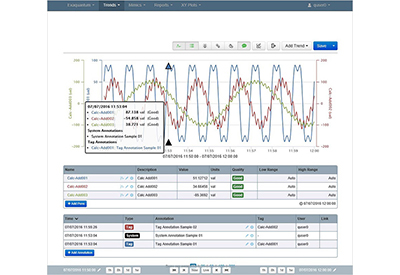
- – Display of collected data in trend charts and other types of graphics, spreadsheets, etc.