How Omron’s FH Series Vision System Expands the Capabilities of Automated Inspections
December 15, 2020
Manufacturers currently using manual processes for quality inspections are facing two major challenges. One is a rising demand for product quality, variety and reliability. The other is the need to protect workers from COVID-19 through social distancing on the manufacturing floor. Both are creating intense pressure to automate visual inspection needs.
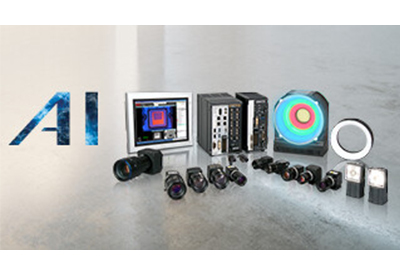
Fortunately, artificial intelligence (AI) is reaching the stage where it can discern object features previously unrecognizable by automated systems. When AI’s ability to automatically learn visual criteria meets powerful image capturing and processing technology from Omron’s FH Series vision system, automating complex visual inspection tasks becomes much more effective.
Factors that complicate efforts to automate visual inspection
When it comes to visual inspection, reliably identifying subtle defects is key, even on flexible lines with items that vary widely in color, size and other aspects. Since these tasks have been particularly troublesome to automate, they’ve traditionally relied on the sensitivity and knowledge of technicians with long-term experience.
By including AI as part of the FH Series vision system, Omron are helping manufacturers automate vision inspection with a lightweight, easily integrable solution. Although AI has traditionally required a special environment, this vision system doesn’t need a dedicated AI engineer for setup or adjustment at manufacturing sites.
Key benefits of the FH Series with AI defect detection tools
The FH Series incorporates Omron’s three-plus decades of experience with image processing and visual inspection to maximize the inspection capability without needing to learn enormous amounts of data. Adding AI to the mix takes automated visual inspection to a whole new level.
- Artificial intelligence captures defects with human-like sensitivity. A new AI-based image filter reproduces the technique that skilled inspectors use to identify a defect on any product background. Scratches and blemishes that were once difficult to capture can now be identified even without the use of samples or adjustment.
- The algorithms learn to identify good products and avoid unnecessary scrap. The FH Series can determine acceptable variation tolerances thanks to the AI Fine Matching tool that learns from the image data of non-defective products to quickly acquire the “expertise” that inspectors develop over the course of many years.
- High-end vision inspection can now be incorporated into any environment. AI has traditionally required a high-end environment, but Omron’s lightweight solution comes in the form of user-friendly processing items that have been integrated into its popular FH Series hardware.
 TruStability series deployed by Surrey Sensors Ltd for testing Formula 1 and unmanned aerial vehicle applications.