Wieland: Motor Starter On the AS-i
November 17, 2020
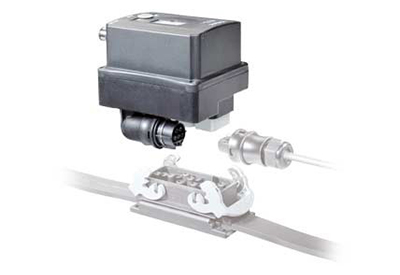
The podis/gesis motor starters for decentralized applications close to motors are based on the podis power bus solution and can be used in harsh industrial environments.
Motor starters: In an especially compact housing, the podis®mcu /gesismcu motor starters combine the function of an electronic motor starter with AS-i control, as well as the connection of up to three sensors. The motor starters are used in applications where threephase standard motors of up to 1.5 kW are started with either one or two directions of rotation.
Soft starters: The new podis®mss/gesismss electronic motor soft starters are used for soft starting and stopping of three-phase asynchronous motors. These soft starters start and stop the drive softly so that light materials that are being transported do not slip when the motor is switched on, and in order to protect the drive mechanically. The ramp-up time, the rampdown time and the breakaway torque can be adjusted continuously.
Maintenance switches: In order to achieve secure isolation of the drives in the event of repair or maintenance, “locally-placed” maintenance switches can disconnect individual conveyor lines or consumers from the mains without the complete system having to be shut down.
Record-breaking installation and commissioning time
Fast installation: With the new podis/gesis motor starters, installation can be carried out up to 70 % faster than before.
Space-saving design: The podis motor starters are compact, and are simply mounted onto the flexible podis flat cable and terminated via two fast-closing manual locking levers. No more complicated and space-consuming mounting on separate mounting plates, thus saving space and simplifying project planning. Alternatively, the gesis motor starter can be mounted remotely on a mounting plate.
Easy installation in or on the wiring duct: The compact design enables optimum ntegration into standard cable management systems. With the podis motor starter, ingoing and outgoing cables run behind the motor starter in the wiring duct, making side-by-side positioning possible. The remote gesis motor starter is mounted either at the motor on a separate mounting plate, or directly onto the cable management system.
Intelligent motor control: The podis/gesis motor starters can be operated as direct, reversing or soft starters of three-phase asynchronous motors up to 1.5 kW (2.01 hp). After the start-up phase, a switchover from the semiconductors to the internal mechanical bypass relays takes place.
Easy operation and optimum diagnostics: Easy configuration via AS-Interface. When a motor starter is replaced, the settings are saved and can be automatically transferred rom the controller to the new motor starter. LED displays for status and error messages make fast on-site troubleshooting possible in the event of a fault, thus reducing expensive downtimes.