The Perfect Link for Data Communication – The Industrial Gateway
July 8, 2022
A single solution for connecting multiple devices, across multiple protocols. In systems where the installed base includes Industrial Ethernet and/or serial protocols, establishing communication across devices is critical and upgrading the equipment isn’t always feasible. The Industrial Gateway is the most cost-effective way to move data between multiple PLCs and slave (server) devices, each with a different protocol, saving you time, money, and the headache of configuring multiple gateway devices.
Features and Benefits
- •Single Solution: Multiple protocols, multiple communication ports, one box
- •Configurable: Transfer data to and from any port, in any combination
- •Multiple serial ports: Maximum device connectivity
- •Cost effective: The functionality of multiple gateways for the price of one
- •Intuitive navigation: Consistent configuration for any protocol conversions
- •No software to install: Browser-based configuration
- •No PLC programming: Transfer data without editing PLC code
- •Context-Sensitive help: Fully searchable with images and step-by-step instructions only one click away
Product at a glance
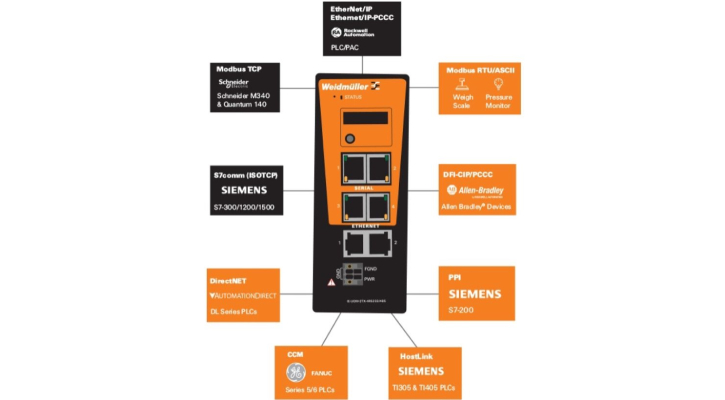
- •The Industrial Gateway supports 12 protocols (the equivalent of 15 one-to-one protocol gateway devices). The more protocols you need bridged, the more savings you gain.
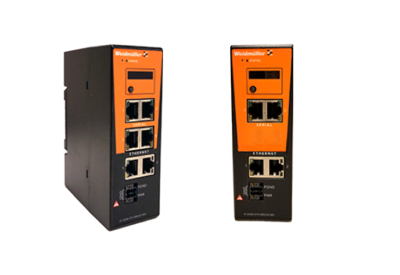
- •The Industrial Gateway features 2 or 4 serial ports that operate simultaneously. This allows you to connect multiple devices with a single gateway. Additionally, each port can be configured with a different protocol.
- •The Industrial Gateway features two Ethernet ports that supports multiple protocols, simultaneously. This allows you to connect multiple devices with a single gateway.
- •The Industrial Gateway supports data transfers to and from any port, in any combination (Ethernet to Ethernet, Ethernet to Serial, Serial to Serial).
Applications
- •Widely used in F&B, automotive and pulp & paper.
- •Supports DF1 protocol, which is highly used in water and wastewater.
- •Transform toward smart manufacturing and Industry 4.0 while retaining existing legacy equipment in the factory.
- •Maintain continuity with functional legacy systems while upgrading to new systems, including PLC and monitoring systems.
- •Control the migration from one PLC brand to another.
- •Integrate a machine where the PLC program cannot be modified.

To learn more, download the Datasheet by clicking here or visit the Product Page by clicking here