Rockwell Automation Provides Cost and Space Savings with New Bus Supply Solution
DCS Rockwell Automation Provides Cost and Space Saving with New Bus Supply Solution 1 400

March 22, 2022


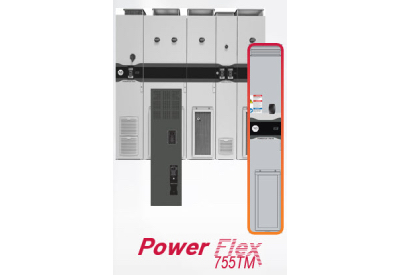
Industrial companies can now benefit from increased space savings and lower costs with a new non-regenerative bus supply. The bus supply is part of the Allen-Bradley PowerFlex® 755TM portfolio. It is a cost-effective solution for a common bus, when regenerative and low harmonics are not required. 

If users have multiple motors, a common bus solution can reduce the size and cost. And customers can save additional cost by using a non-regenerative supply. 

The non-regenerative bus supply converts three-phase AC line voltage to DC. It is compatible with PowerFlex 755TM bus supplies and common bus Inverters. 

Part of the 755T drives portfolio, the non-regenerative supply solutions must be paired with a drive with TotalFORCE® technology to be considered TotalFORCE. But it can also serve as a non-regenerative DC power supply for common bus applications, which is not TotalFORCE. 

The non-regenerative supply is available in 6-Pulse and 12-pulse configurations with XT corrosive gas protection. The distributed DC Bus is located in space saving, modular Rittal cabinets.

This solution works best in industries such as oil and gas, tire & rubber, mining, food and beverage and metals.
DCS Rockwell Automation Provides Cost and Space Saving with New Bus Supply Solution 2 400


To learn more about the new bus supply solution from Rockwell Automation, click here 

 

Related Articles


Editor’s Pick: Featured Article

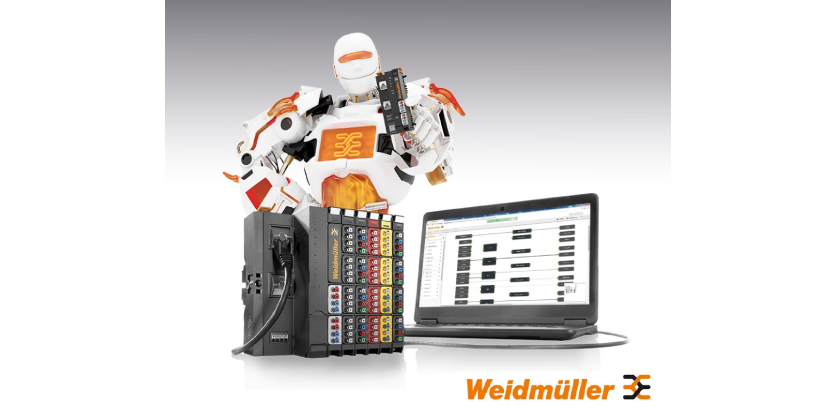
Weidmüller’s u-control 2000: The Automation Controller

Weidmüller’s u-control 2000: The Automation Controller

Weidmüller’s scalable engineering software, u-control 2000, adapts individually to your requirements. And, the u-control is powerful, compact and fully compatible with Weidmüller’s I/O system u-remote. This article looks at what makes u-control the heart of your automation.

Programmable logic controllers (PLCs) are one of the main components of any automated system. A typical control system has inputs, outputs, controllers (i.e., PLCs), and some type of human interaction with the system, a human machine interface (HMI), for example.

Read More


Latest Articles

  • How Motor Pole Count Influences Speed and Torque in Servo Motors

    December 9, 2025 Servo motors deliver precise, repeatable motion, and their performance is shaped by how torque, speed, and stability interact under load. One structural element that defines this behavior is motor pole count. Pole count determines how the magnetic field rotates inside the motor and how much torque the motor can produce at different… Read More…

  • Digital Revolution in Transformer Substations

    December 9, 2025 The energy sector is under a lot of pressure. German distribution grid operators need to get their infrastructure ready for the energy transition and fast. By 2030, some 80 percent of electricity is to be generated from renewable sources. A pilot project at naturenergie netze GmbH is demonstrating how transformer substations can… Read More…